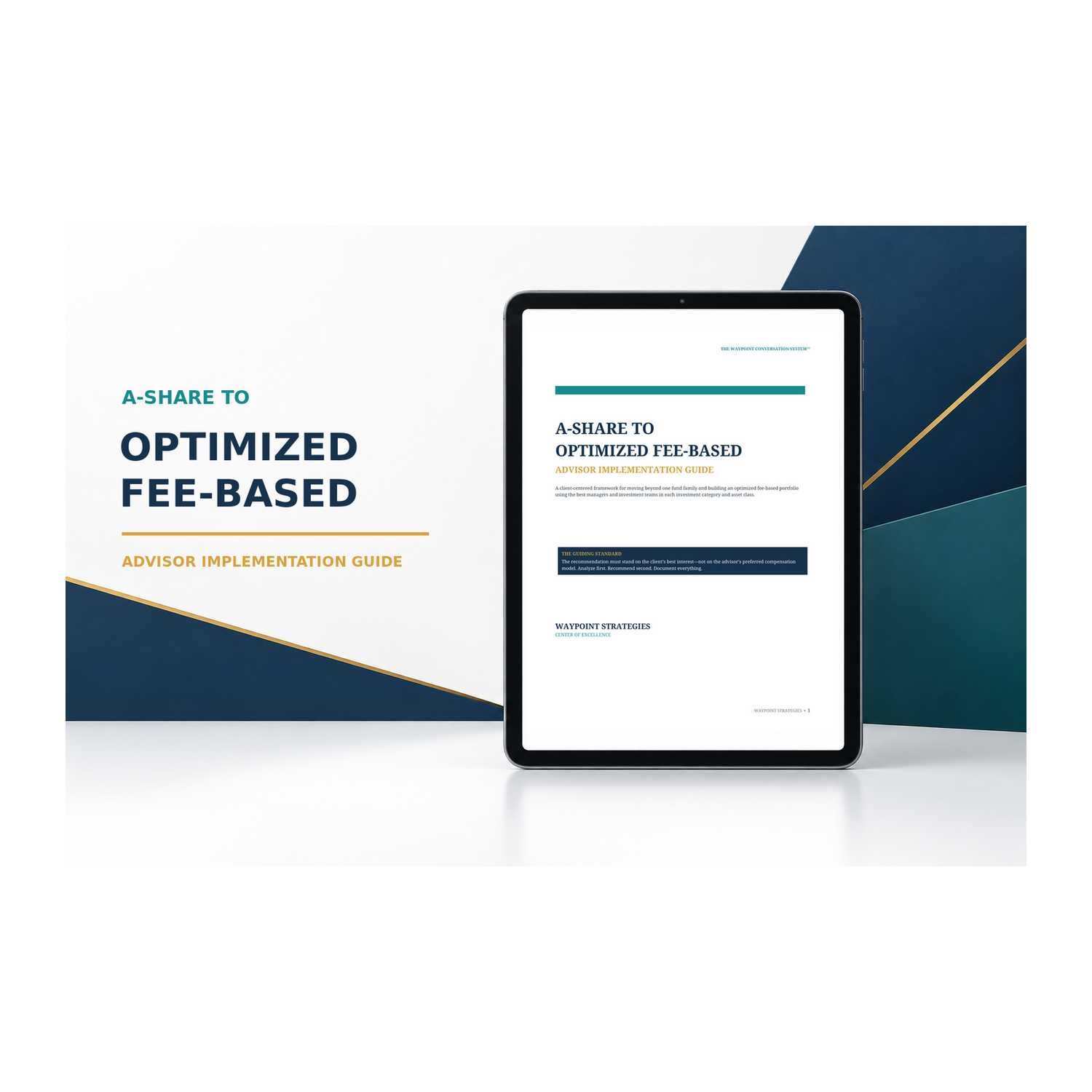
A-Share to Optimized Fee-Based Advisor Implementation Guide
PREVIEW THE GUIDE — CLICK THROUGH THE IMAGES
Move Beyond One Fund Family With a Proven Client-Centered Process
Help clients understand the potential advantages of moving from traditional A-share mutual funds to an optimized fee-based portfolio—while keeping the conversation positive, transparent and focused on their financial goals.
The process behind this guide has been successfully used to transition approximately half a billion dollars in client assets from A-share mutual funds to optimized fee-based accounts. It provides financial advisors with a proven, repeatable framework for identifying appropriate opportunities, communicating the potential benefits and implementing the transition responsibly.
This comprehensive 18-page guide helps advisors analyze the client’s current investments, explain the differences between the two approaches and present an optimized fee-based solution with confidence.
Build an Optimized Fee-Based Portfolio
An optimized fee-based portfolio provides the flexibility to select the managers and investment teams believed to be best suited for each investment category and asset class—without being limited to a single mutual-fund family. This broader investment approach may help improve diversification, manage risk, enhance tax efficiency and increase the client’s probability of achieving their financial goals.
What’s Included
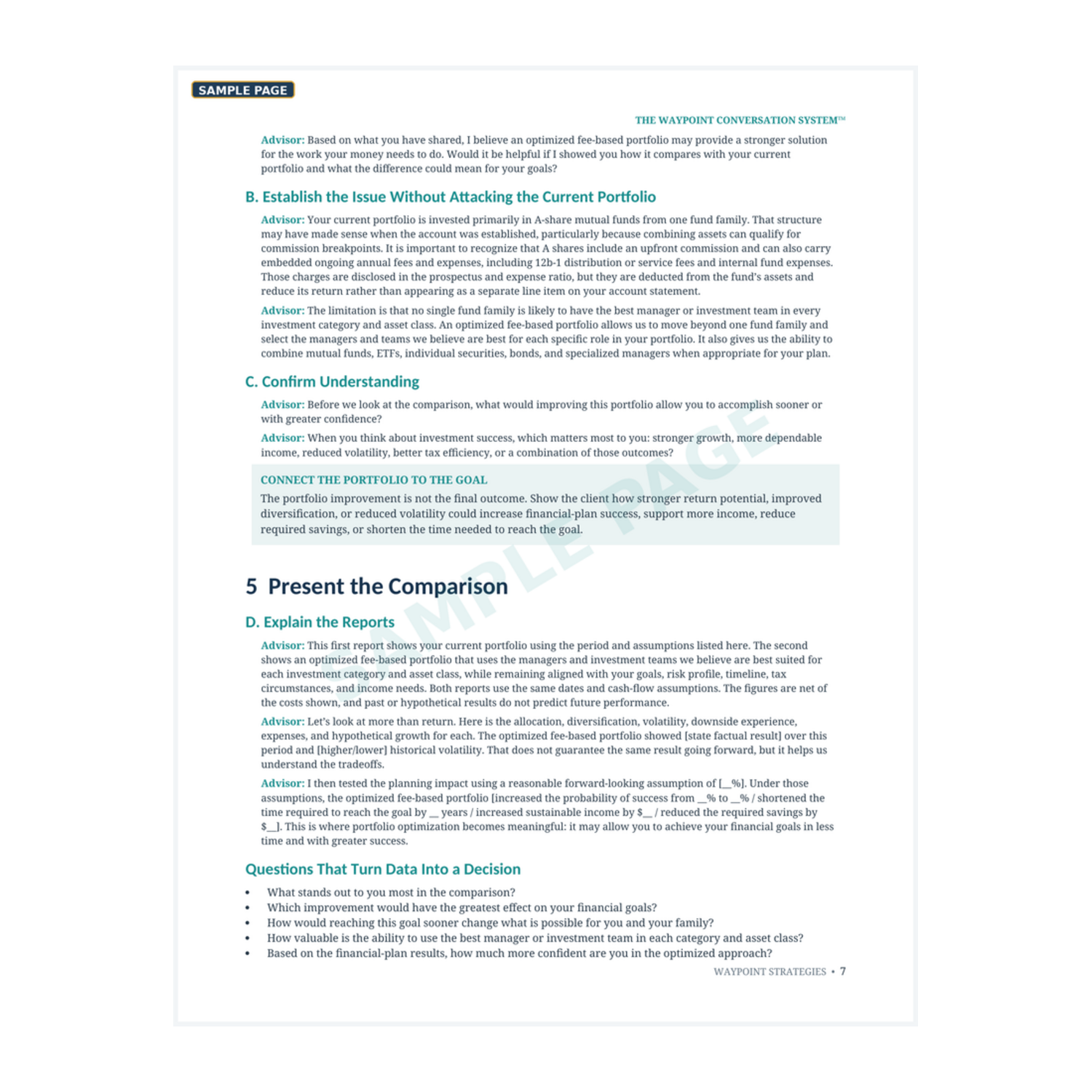
A complete advisor conversation framework
Client-friendly language for explaining A-share commissions and ongoing annual fund expenses, including 12b-1 fees and internal operating expenses
A clear comparison of embedded mutual-fund expenses and separately reported fee-based account fees
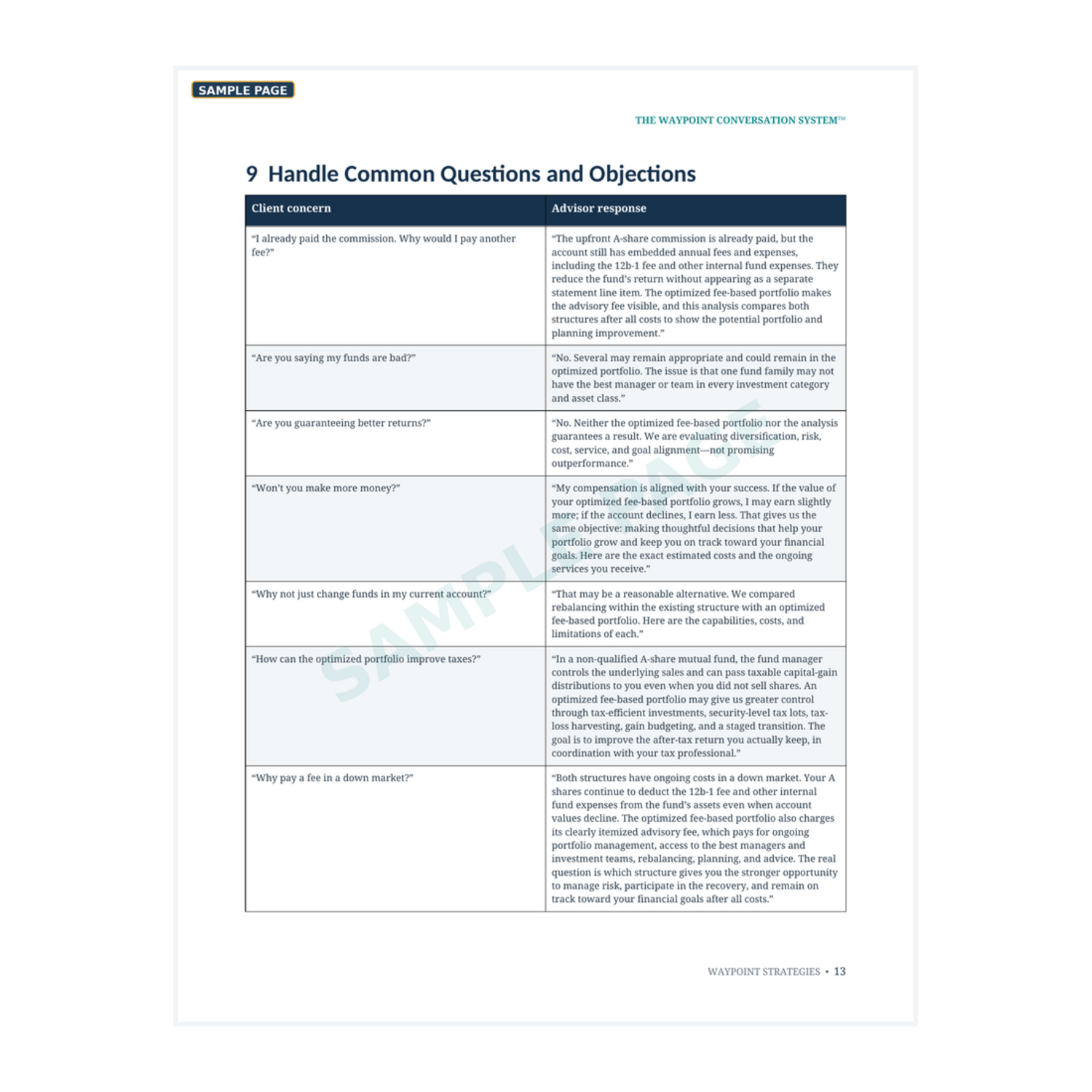
Guidance for positioning advisor compensation as aligned with the client’s ongoing success
Responses to common client questions and objections
A dedicated non-qualified account and tax-planning section
Guidance for evaluating embedded capital gains before making a transition
Strategies for spreading a transition across multiple tax years when appropriate
A framework for explaining the potential long-term tax-control advantages of an optimized portfolio
Meeting-preparation checklists, documentation standards and implementation steps
A concise 60-second advisor presentation
More Than a Sales Script
This is a practical implementation system designed to help advisors identify when a transition may benefit the client, conduct a complete analysis and clearly communicate how an optimized fee-based portfolio could help the client pursue their financial goals in less time and with greater potential for success.
Digital Access
Digital PDF | Immediate Download After Purchase
Purchase includes a license for use by one advisor or within one advisory practice. Redistribution, resale, or sharing outside the purchasing practice is prohibited.
Every recommendation should be based on the client’s individual circumstances, investment objectives, costs, tax considerations and best interests. This guide helps advisors lead that conversation thoroughly, professionally and confidently.
PREVIEW THE GUIDE — CLICK THROUGH THE IMAGES
Move Beyond One Fund Family With a Proven Client-Centered Process
Help clients understand the potential advantages of moving from traditional A-share mutual funds to an optimized fee-based portfolio—while keeping the conversation positive, transparent and focused on their financial goals.
The process behind this guide has been successfully used to transition approximately half a billion dollars in client assets from A-share mutual funds to optimized fee-based accounts. It provides financial advisors with a proven, repeatable framework for identifying appropriate opportunities, communicating the potential benefits and implementing the transition responsibly.
This comprehensive 18-page guide helps advisors analyze the client’s current investments, explain the differences between the two approaches and present an optimized fee-based solution with confidence.
Build an Optimized Fee-Based Portfolio
An optimized fee-based portfolio provides the flexibility to select the managers and investment teams believed to be best suited for each investment category and asset class—without being limited to a single mutual-fund family. This broader investment approach may help improve diversification, manage risk, enhance tax efficiency and increase the client’s probability of achieving their financial goals.
What’s Included
A complete advisor conversation framework
Client-friendly language for explaining A-share commissions and ongoing annual fund expenses, including 12b-1 fees and internal operating expenses
A clear comparison of embedded mutual-fund expenses and separately reported fee-based account fees
Guidance for positioning advisor compensation as aligned with the client’s ongoing success
Responses to common client questions and objections
A dedicated non-qualified account and tax-planning section
Guidance for evaluating embedded capital gains before making a transition
Strategies for spreading a transition across multiple tax years when appropriate
A framework for explaining the potential long-term tax-control advantages of an optimized portfolio
Meeting-preparation checklists, documentation standards and implementation steps
A concise 60-second advisor presentation
More Than a Sales Script
This is a practical implementation system designed to help advisors identify when a transition may benefit the client, conduct a complete analysis and clearly communicate how an optimized fee-based portfolio could help the client pursue their financial goals in less time and with greater potential for success.
Digital Access
Digital PDF | Immediate Download After Purchase
Purchase includes a license for use by one advisor or within one advisory practice. Redistribution, resale, or sharing outside the purchasing practice is prohibited.
Every recommendation should be based on the client’s individual circumstances, investment objectives, costs, tax considerations and best interests. This guide helps advisors lead that conversation thoroughly, professionally and confidently.